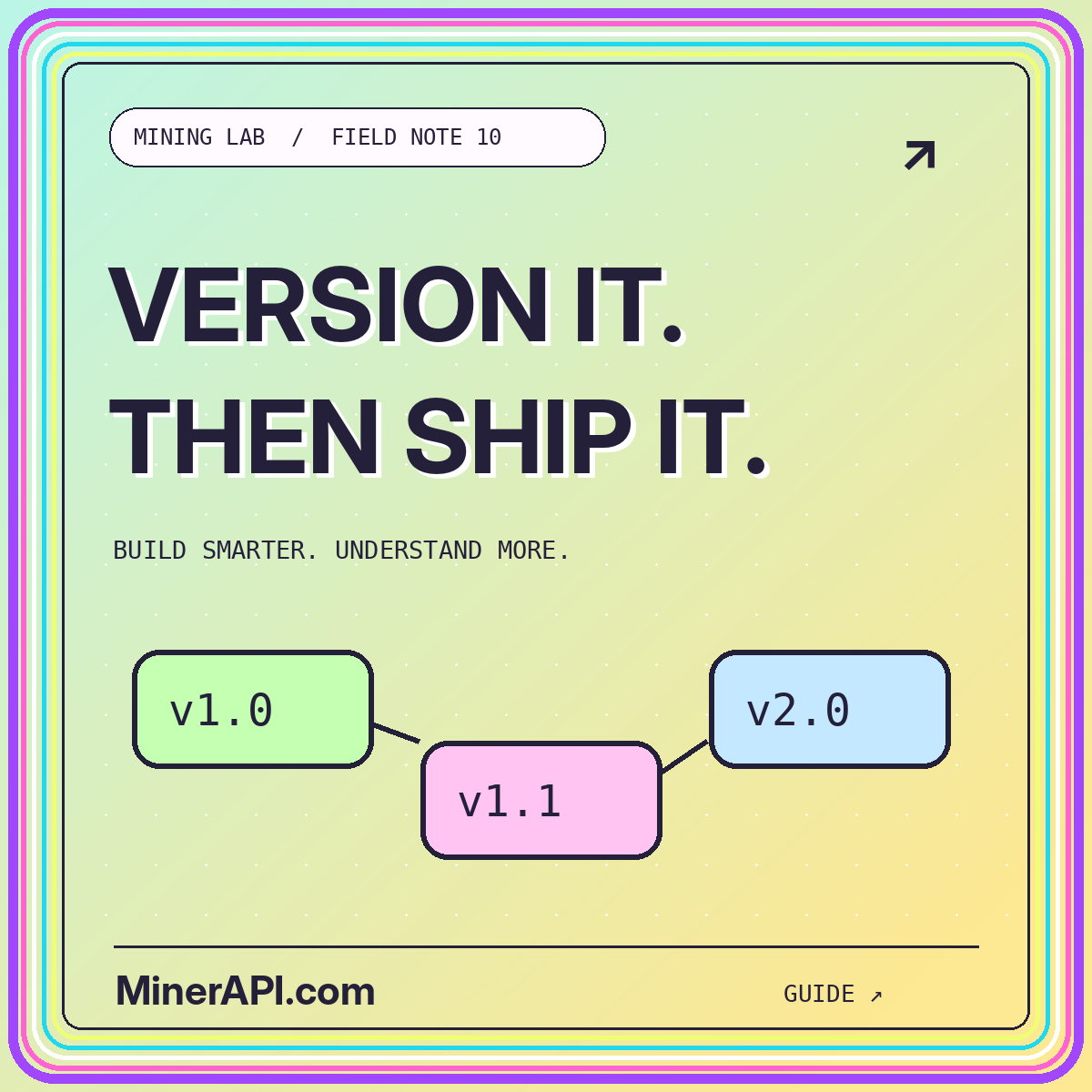
Prompt API Workflows: Version, Test, and Release
Give prompt records stable identities, explicit input contracts, controlled execution, and evaluation evidence that another developer can inspect.
Read the field guide 7 min ↗
Miner API Security: A Read-Only First Approach
Separate public documentation, private collection, and equipment control. Keep secrets out of browsers and verify access to every object.
Read the field guide 7 min ↗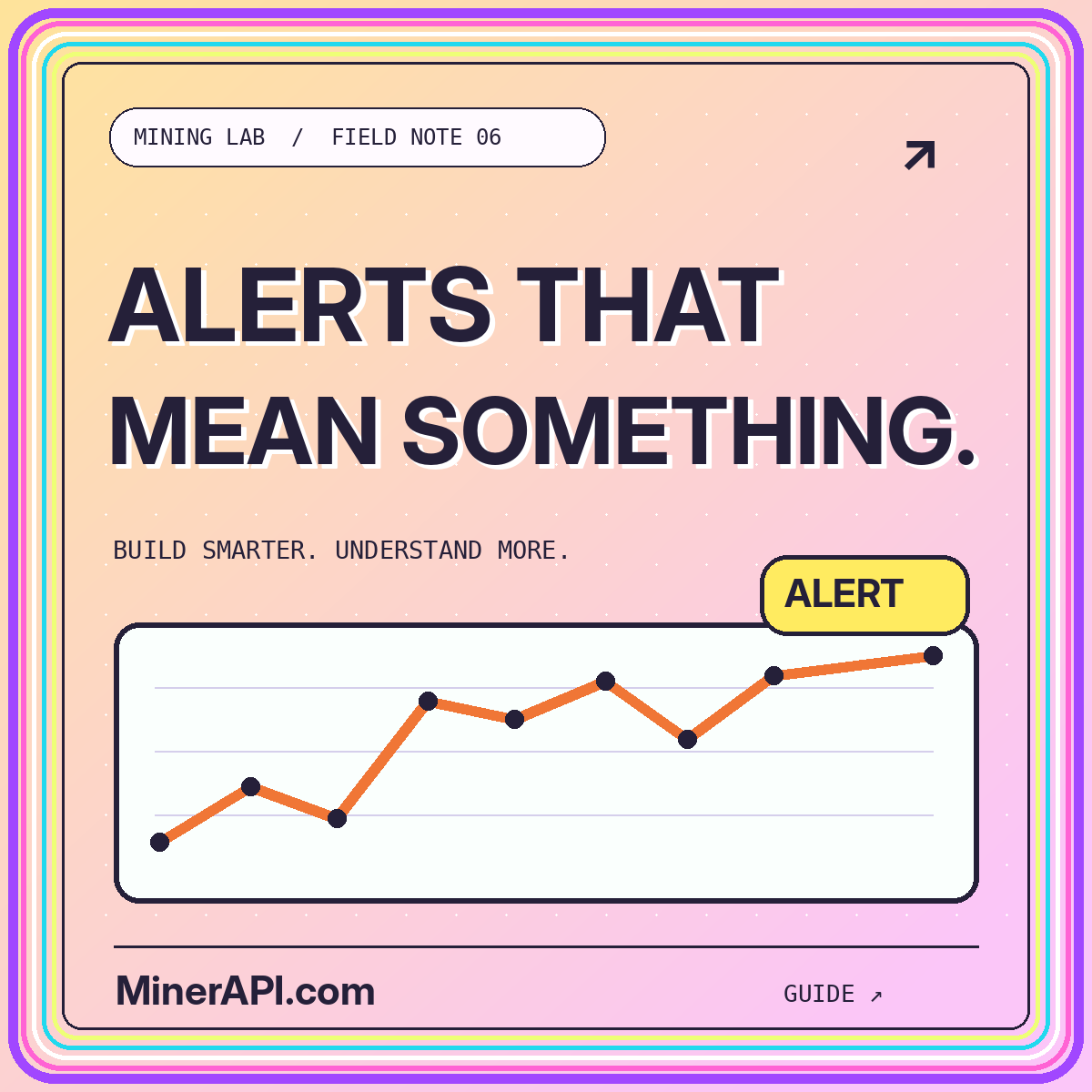
Mining Alerts That Lead to Useful Action
Build quieter, more useful notifications with freshness rules, persistence, recovery states, and runbooks that preserve the evidence.
Read the field guide 7 min ↗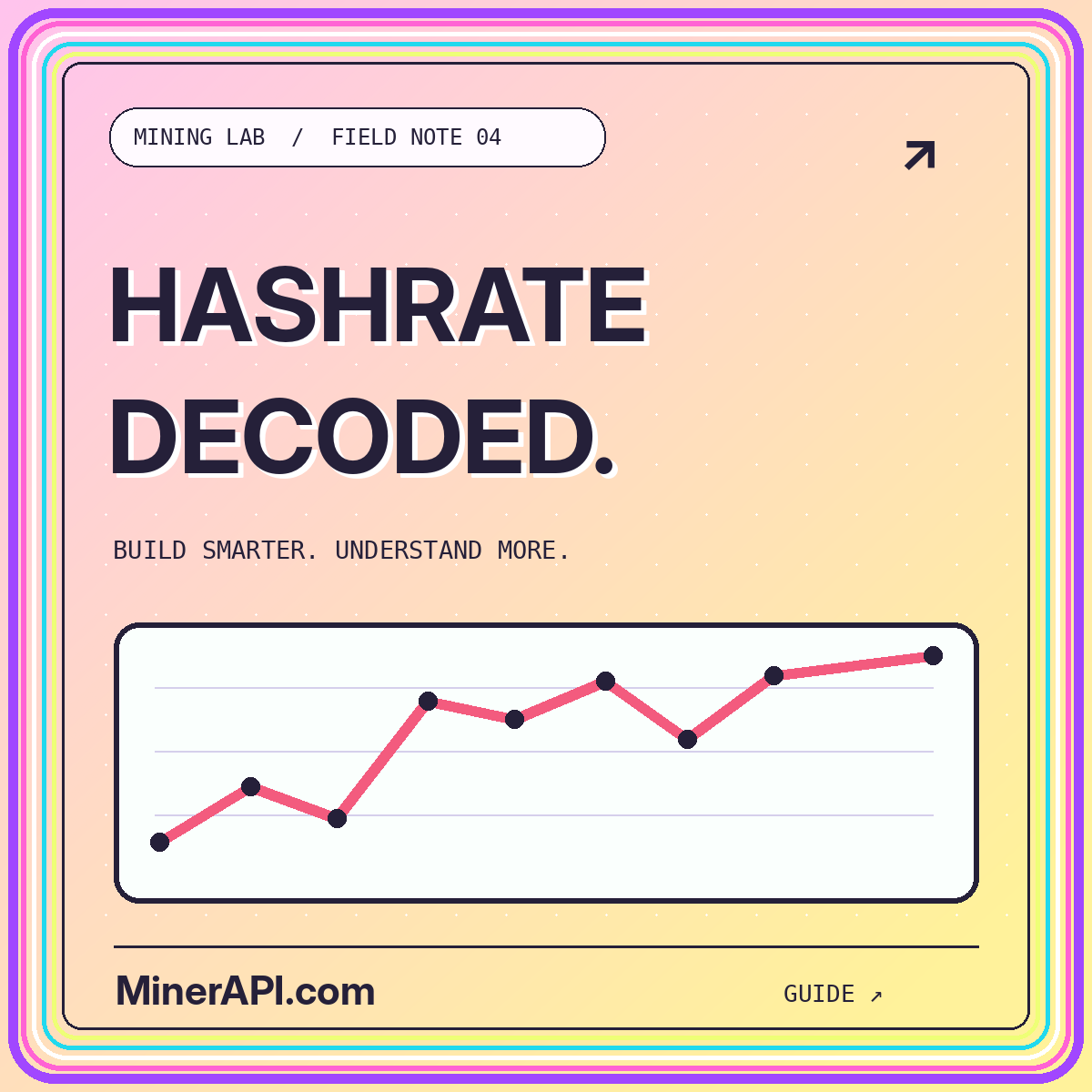
Hashrate and Difficulty: Read Mining Data Correctly
Understand measurement scope, averaging windows, unit conversions, and why a missing observation should never become an invented zero.
Read the field guide 6 min ↗
GPU Miner API: Metrics That Actually Matter
Keep hardware observations, mining-process activity, and upstream results separate so your GPU dashboard answers the right questions.
Read the field guide 7 min ↗
Bitcoin Miner API: A Practical Developer Guide
Separate node, device, and pool data. Build a read-only integration with explicit units, fresh observations, and reliable failure states.
Read the field guide 6 min ↗
Mining Pool APIs and Stratum: Know the Difference
Design a source-aware pool view that keeps job transport, worker identity, share observations, and account reporting in their proper places.
Read the field guide 6 min ↗
ASIC Miner API: Build Reliable Telemetry
Turn device-specific responses into a dependable contract with capability checks, sensor context, and a tested normalization layer.
Read the field guide 7 min ↗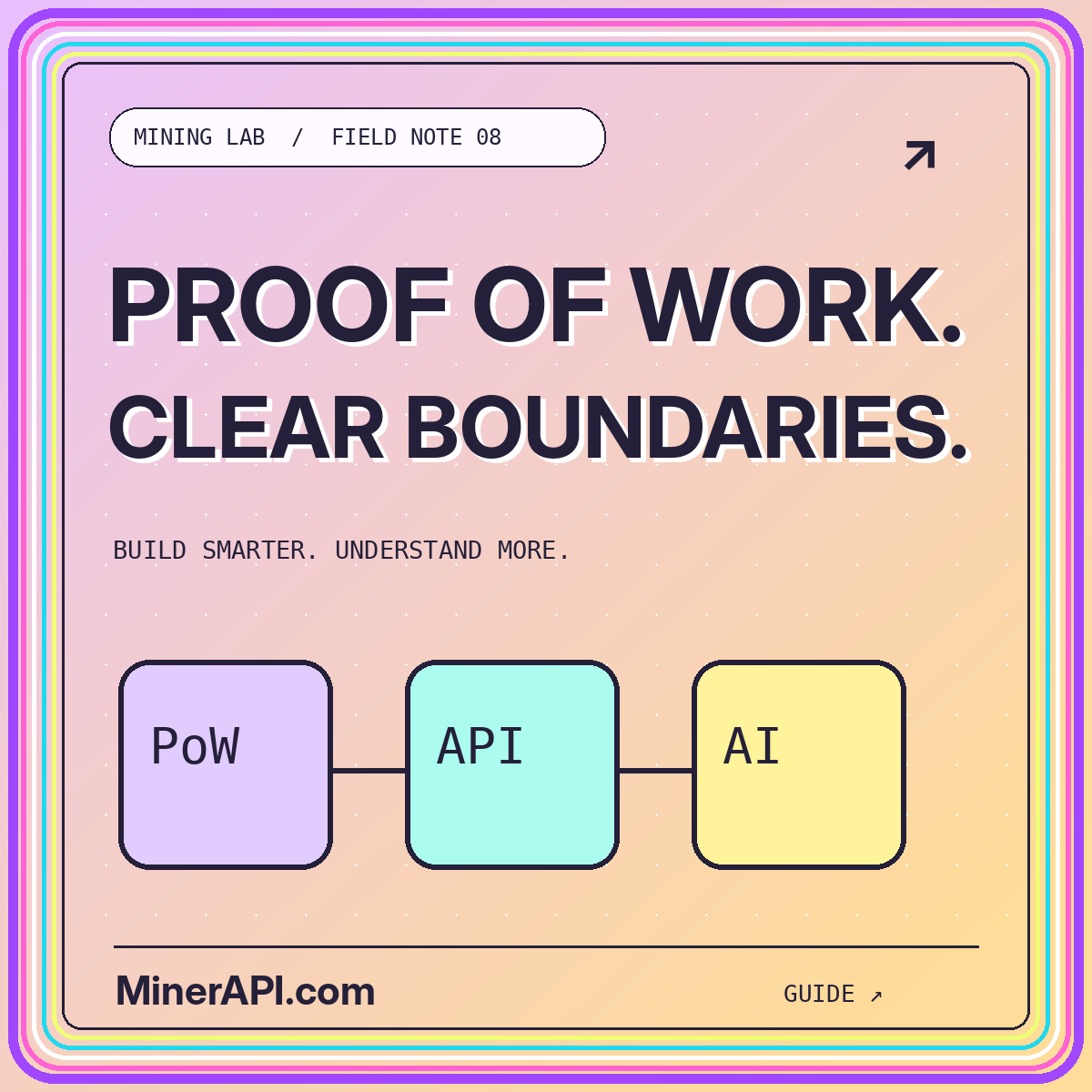
Proof of Work vs. Wallet APIs: Clear Boundaries
Mining equipment, blockchain nodes, wallet connections, and AI prompt workflows serve different roles. Give each a clear data contract.
Read the field guide 7 min ↗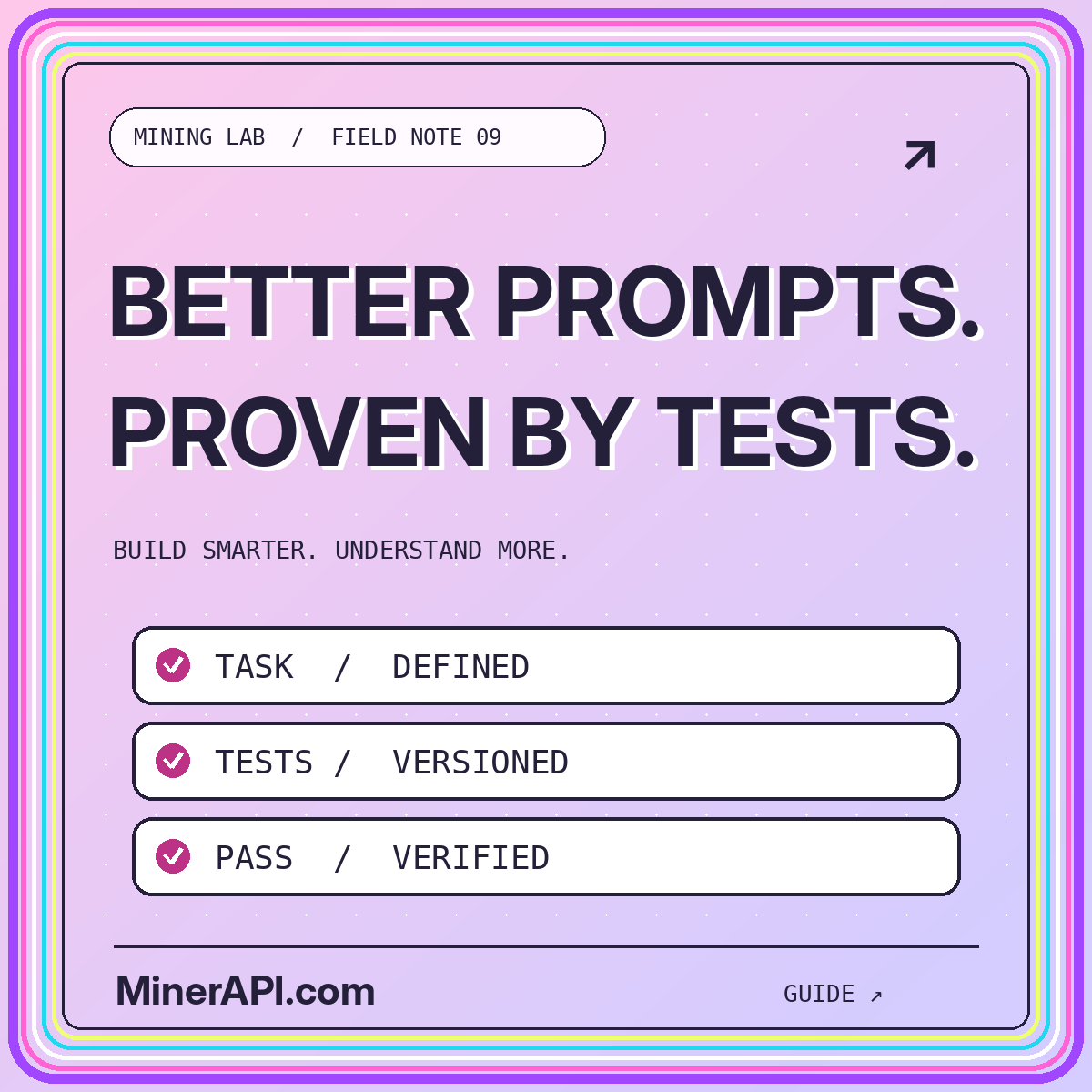
AI Prompt Mining: Evaluate Before You Automate
Move from interesting prompt candidates to reproducible decisions with representative test cases, versioned rubrics, and failure analysis.
Read the field guide 7 min ↗