A prompt becomes an application component when other code depends on it. At that point, changing a sentence can alter output structure, error handling, or the meaning of a downstream result. A prompt API needs the same basic discipline as other interfaces: a stable contract, explicit versions, controlled inputs, and a way to explain which configuration produced an output.
This guide proposes a small workflow for turning prompt candidates into maintainable records and evaluation jobs. It does not assume a particular model provider or require a blockchain. The AI Prompt Guides hub introduces the topic, and the evaluation guide explains how to establish evidence before promoting a candidate into a shared workflow.
Store prompts as inspectable artifacts
Keep prompt text and its metadata in version-controlled files or another system with comparable history and review controls. Separate the stable identifier from the display title and content version. A person should be able to rename “Ticket triage” without breaking every application that refers to the underlying prompt record.
The Promptfoo prompt configuration documentation describes text, chat, and file-based prompt definitions, including templated variables. Those are useful examples of keeping prompt content explicit rather than burying it in an opaque interface. Your own record can remain simple: identifier, version, task description, required variables, expected output shape, and a reference to the evaluation evidence that supports using this revision.
Define the input contract before interpolation
List the required variables, their expected types, and their allowed size or format. Decide what happens when a variable is absent, empty, or malformed. Do not silently replace missing business data with a made-up value simply to produce a complete prompt. A clear validation error is easier to handle than an apparently successful answer built from invented context.
Keep untrusted input distinct from instructions controlled by the application. Delimit content and explain its intended role, but do not treat delimiters as a complete security boundary. Sensitive actions still require independent authorization outside the model. A prompt that says “ignore unauthorized requests” is not a substitute for checking permissions in the system that actually reads data or performs an operation.
Version behavior, not just the filename
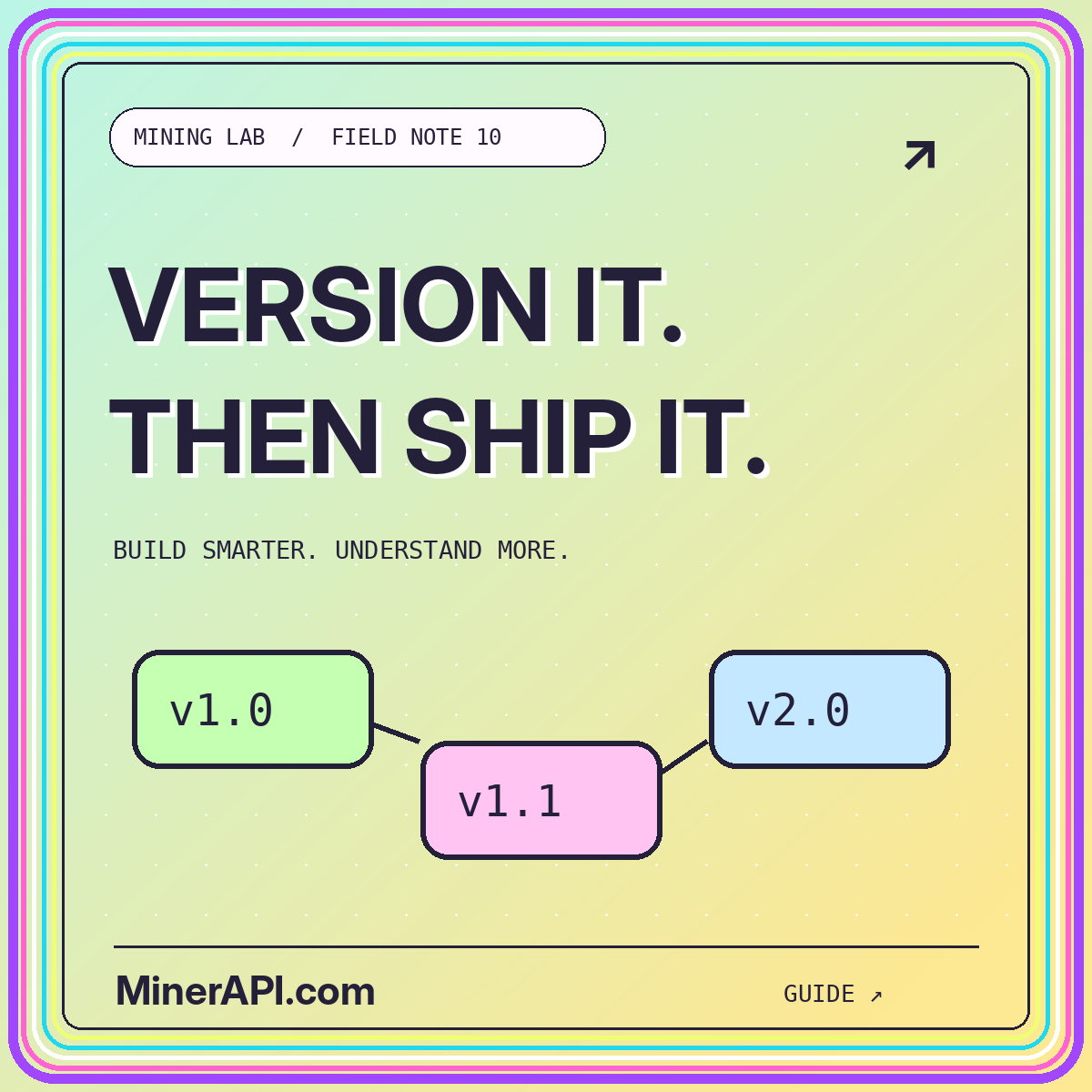
Choose a versioning convention and document what changes require a new version. A change to required variables or the expected output shape is a consumer-facing contract change. A wording adjustment can also matter if it changes the evaluated behavior. Preserve immutable released revisions instead of updating the content behind a stable version label without notice.
Allow a convenient alias such as a release channel only when its resolution is recorded for every run. The consumer should be able to discover the exact revision used, even if it requested a moving alias. A result that only says “latest prompt” is difficult to reproduce after the alias moves. Store the resolved prompt version alongside the model and evaluator context rather than asking someone to reconstruct it from deployment dates.
Keep execution and evaluation as separate jobs
An execution job asks the model to perform the application task. An evaluation job examines outputs against defined criteria. Combining them into one unexplained score hides which stage failed. Give each job its own identifier, status, timestamps, and safe error information. Link evaluation results to the execution records they assessed.
For a small system, these may be simple records rather than a complex queue architecture. The important part is preserving the relationship. A failed model request is not a failed task-quality evaluation, because there may be no task output to judge. A malformed output can fail a structural check while remaining available for diagnostic review under appropriate access controls. Clear states prevent the dashboard from presenting every failure as the same problem.
Make retries finite and outcomes understandable
Decide which failures are eligible for retry, how many attempts are allowed, and how long the workflow may continue. Track the attempt number and preserve the final known state. Do not build a loop that keeps calling a provider until an attractive answer appears and then reports only that successful attempt as if it were the entire experiment.
When a workflow includes side effects, keep them outside the model response and apply explicit application controls. A generated instruction is not authorization to send an email, modify a system, or make a purchase. Use a review or permission gate appropriate to the action. Design recovery for uncertain outcomes rather than blindly repeating the entire workflow after a timeout. This keeps the execution history meaningful and avoids accidental duplicate actions.
Validate outputs before passing them downstream
Parse the expected format and verify required fields before another component consumes the result. Keep format validation separate from substantive evaluation. A valid JSON object can still contain an unsupported claim or a value outside the task's allowed categories. A consumer should not interpret “parsed successfully” as “correct and approved.”
Define a safe failure path for each validation stage. That may be a clearly marked error, a request for human review, or a bounded retry under the documented policy. Do not quietly replace an invalid output with an old example. Sample data is useful in tests, but it must never masquerade as the result of a current execution. This distinction mirrors the separation between demo telemetry and real observations elsewhere on MinerAPI.com.
Protect sensitive inputs and useful traces
Record enough context to reproduce a problem without automatically storing every private input forever. Define which fields may be logged, who can access them, and how long they are retained. Use stable diagnostic identifiers so a public error can be investigated without exposing the full prompt or response to every client.
Review trace data as part of the security boundary. A carefully protected provider key is not enough if the application publishes private ticket text in an exception message. Consider the destination of debug logs, exported evaluation reports, and screenshots used in support. The mining API security guide covers the same principle in another setting: information should cross a boundary because the task requires it, not because forwarding the whole payload is convenient.
Promote a revision through a small release gate
A practical release gate can require a completed evaluation against a named dataset, no unresolved critical failures under your rubric, and a reviewer who understands the remaining limitations. Keep the criteria specific to the application rather than relying on a generic quality score. Save the decision with the prompt revision so future maintainers can understand why it was released.
Test the consumer against the new output contract before moving an alias or updating configuration. Keep a rollback revision and know which components depend on the change. A prompt release can be small and still deserve a clear handover. The release record should identify the intended effect, the evidence checked, and any behavior that consumers must handle differently. This turns prompt editing into controlled application maintenance.
Design a public sample without pretending to execute it
A static developer site can publish prompt records, evaluation summaries, and client examples as fixtures. Label them as samples and make the response include a demo flag. The MinerAPI sample API follows this approach. A visitor can inspect and fetch the record without entering private data, creating an account, or invoking a model provider.
A useful fixture might contain a prompt identifier, a revision, a task label, and fictional evaluation counts. Its documentation should explain what a real implementation would need to supply, while keeping the fixture itself fully functional as a read-only resource. Do not add a “Run model” button that only swaps canned text without saying so. A working example is stronger when its scope is obvious from both the label and the response.
Conclusion: make every result traceable to a contract
A maintainable prompt API connects explicit inputs, immutable prompt revisions, bounded execution, and versioned evaluation evidence. Validate outputs before downstream use and protect the data in traces as carefully as the data in requests. Start with a small record shape and a clear release gate. The result is a workflow that developers can inspect and improve without guessing which invisible prompt change produced today's behavior.