Define the scope
Label whether a measurement covers a device, a pool worker, or the network.
Align the window
Compare observations only after checking their timestamps, units, and averaging methods.
Preserve the boundary
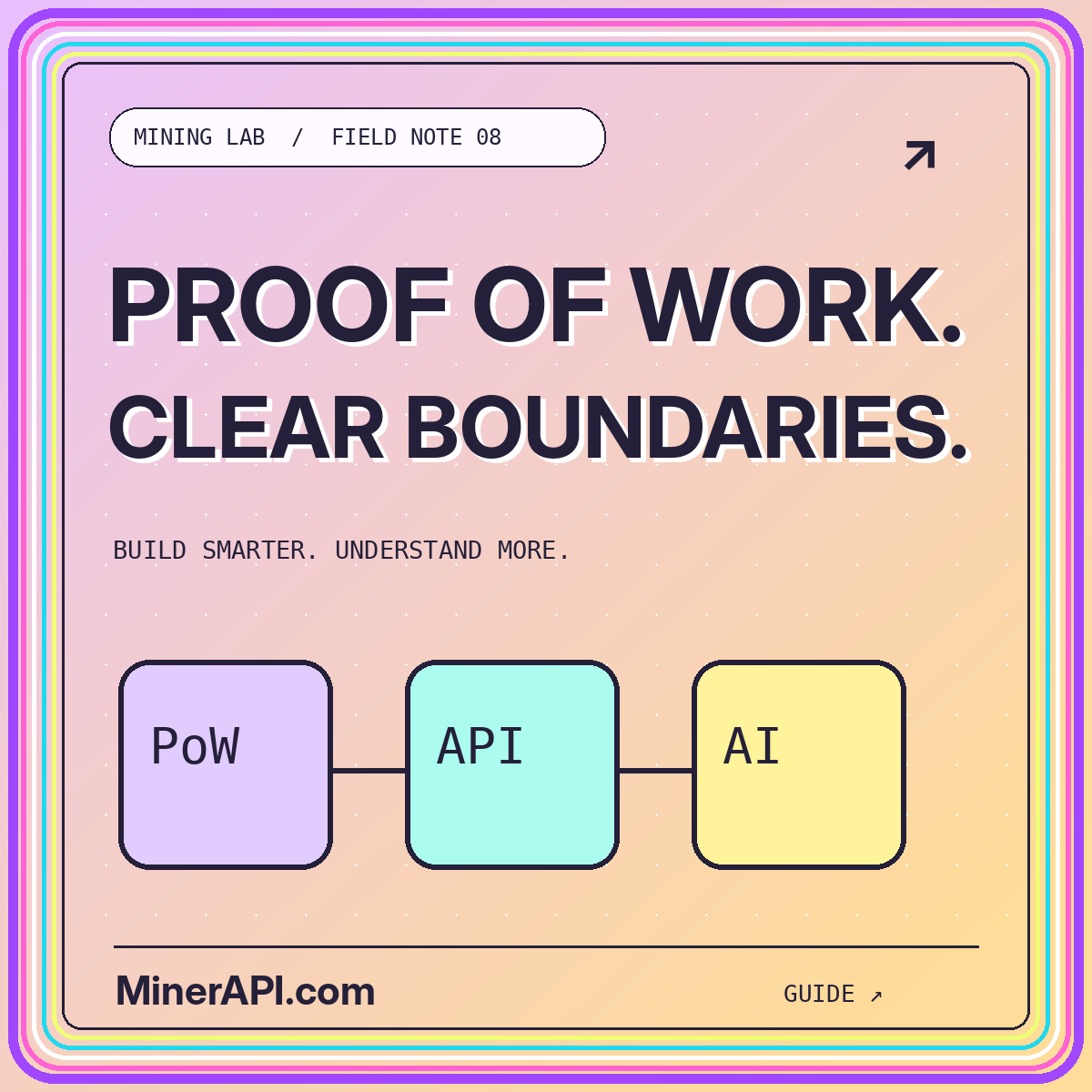
Keep mining interfaces separate from wallet permissions and AI prompt evaluation.
A number needs a measurement contract
Hashrate should travel with its scope, unit, observation time, and window. A device reading and a network estimate can both be useful without being interchangeable. Keep conversions in tested functions, preserve missing intervals, and explain the coverage behind a displayed average.
Bitcoin Core's getnetworkhashps reference describes a network estimate based on a block window. That is distinct from a direct sensor reading on an individual worker. Read the documented network-hashrate method.
Build comparisons that can be explained
Use hand-checkable fixtures before constructing elaborate charts. Test units, irregular intervals, zero denominators, and incomplete coverage. A smooth line should not hide an hour in which the collector obtained no observations. If a ratio cannot be calculated from compatible measurements, display the reason instead of manufacturing a favorable result.
Treat difficulty fields as source-specific. Document whether the value represents a network observation or a pool-side target, and avoid suggesting that a dashboard control can change a network consensus parameter. An API should clarify the meaning of an observation before it offers a visual comparison.
Related ecosystems are not identical systems
A blockchain wallet icon does not establish a mining integration. Likewise, the AI prompt workflow on this site concerns candidate prompts and task evaluation rather than consensus or block production. Use the dedicated guides to keep those concepts clear when designing a multi-topic developer interface.
The sample dashboard illustrates response shapes and presentation only. It does not perform hashing, validate blocks, or change a miner's configuration.